
Industrial & Structural Plastics Applications
When a component has to carry load, resist wear, survive chemicals, or perform outdoors, the material choice matters. Structural plastics give fabricators, machine shops, and manufacturers a practical alternative to metal, wood, and other traditional materials in demanding industrial environments.
Introduction to Structural Plastics
Structural plastics are engineered polymer materials designed for high strength and durability. Unlike commodity plastic used for packaging or low-load consumer products, structural plastics are selected for performance properties such as toughness, wear resistance, dimensional stability, chemical resistance, and long service life.
The key distinction is function. Commodity plastics are usually chosen for cost and volume. Structural plastics are chosen when a part must do work: carry weight, absorb impact, slide against another surface, insulate electricity, resist corrosion, or hold its shape under load.
Compared with traditional materials like steel, aluminum, and wood, structural plastics often offer lower weight, better corrosion resistance, lower maintenance, and more design flexibility. Structural plastics can replace traditional materials like wood and metal due to corrosion resistance, and they provide lower long-term maintenance compared to wood or metals.
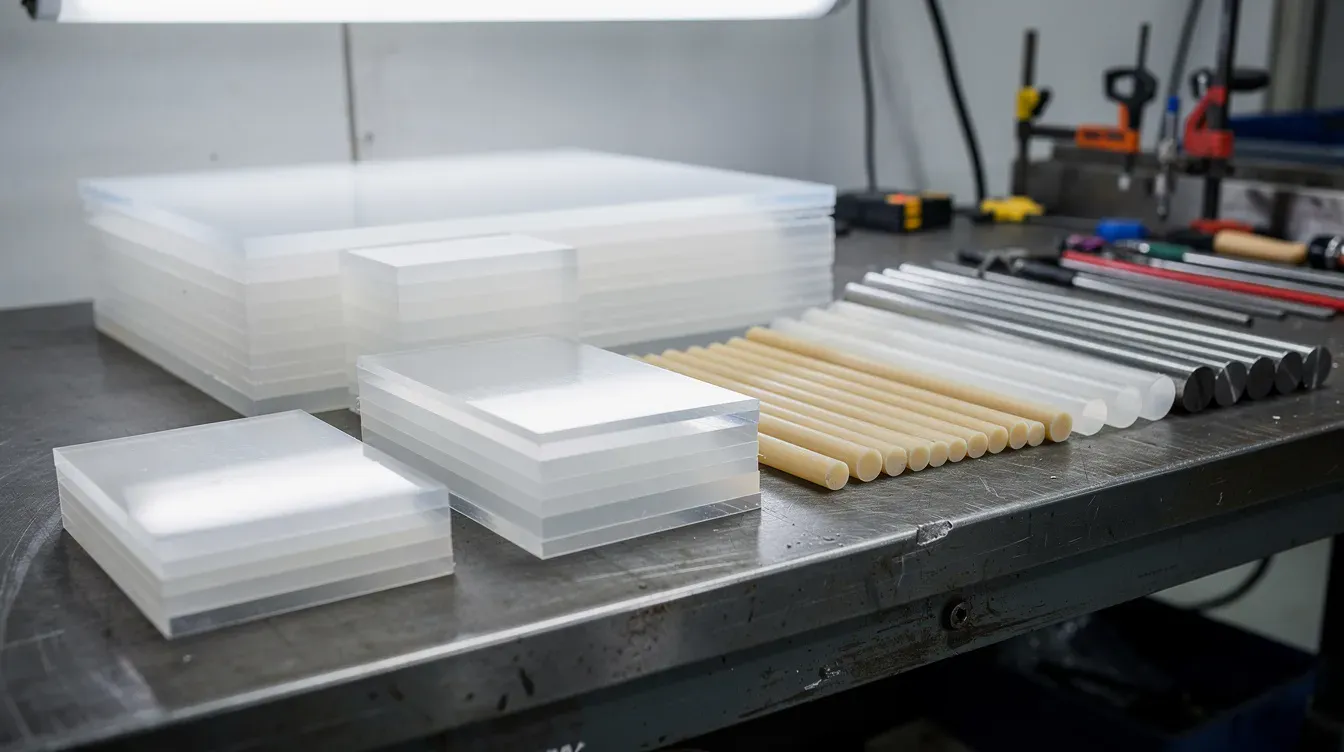
This applications page focuses on industrial and structural plastics in sheet, rod, and tube form. These stock shapes are commonly machined, cut, routed, drilled, welded, thermoformed, or fabricated into parts for load-bearing and high-performance environments.
Structural plastics are often reinforced with fibers or fillers to perform load-bearing roles. When reinforced, a structural plastic may also become a composite material, such as glass-filled nylon, carbon-filled PEEK, or FRP. FRP combines a polymer matrix with fiber reinforcement, and the choice of fiber and matrix affects FRP properties.
Ready Plastics is an online-first sourcing partner for fabricators, machine shops, OEMs, and manufacturers that need material quickly. Through real-time inventory, clear pricing, rapid fulfillment, and full documentation, Ready Plastics helps teams keep projects moving from quote to order to delivery.
Why Choose Structural Plastics Over Traditional Materials?
Choosing structural plastics is not just about replacing one material with another. It is about solving problems in weight, corrosion, wear, maintenance, and production efficiency.
Structural plastics excel in harsh environments and are used in automotive and manufacturing applications. They are also used in a variety of applications from construction to automotive, especially where moisture, chemicals, repeated impact, or weight reduction are major concerns.
Here are the practical advantages.
- Weight reduction
Plastics weigh significantly less than traditional materials, reducing transportation costs. In the right design, structural plastics can make components 30–70% lighter than comparable steel or aluminum parts. That matters for conveyor parts, guards, machine frames, access panels, and shipped assemblies. - Corrosion resistance
Structural plastics are resistant to corrosion, rot, UV rays, and moisture. They are resistant to rust and do not attract pests, improving outdoor reliability. This makes them a strong choice for washdown areas, wastewater plants, marine settings, chemical processing, outdoor platforms, and food manufacturing environments. - Lower maintenance
Wood can rot, split, and attract pests. Metal can rust, require coatings, and need repainting. Structural plastics provide lower long-term maintenance compared to wood or metals, especially in wet, salty, corrosive, or outdoor service. - Impact and fatigue performance
Materials such as UHMW and polycarbonate absorb shock well. UHMW, for example, is widely used where parts see repeated sliding, impact, vibration, or abrasion. According to Ready Plastics’ UHMW properties resource, UHMW offers excellent wear performance and very high impact toughness. - Electrical and thermal performance
Many structural plastics are naturally electrical insulators. Plastics reduce heat transfer, enhancing energy efficiency in buildings and equipment housings. This can be valuable for electrical panels, window profiles, architectural components, thermal breaks, and equipment guards. - Design and production flexibility
Structural plastics can be molded into complex shapes through casting, pressing, or extrusion. Injection molding allows for highly efficient mass production of structural plastics when part volumes justify tooling. Thermoplastics can be reshaped multiple times when heated, while thermosets cannot be reshaped after hardening.
A useful way to think about the choice:
| If your problem is... | A structural plastic may help by... |
|---|---|
| Rust, corrosion, or moisture damage | Replacing coated metal with corrosion-resistant plastic or FRP |
| Rot, splintering, or pest damage | Replacing wood with HDPE, PVC, or plastic lumber |
| Heavy assemblies | Reducing part weight and freight cost |
| Wear or sliding friction | Using UHMW, HDPE, acetal, or nylon |
| Impact or guarding | Using polycarbonate or other tough sheet products |
| Electrical isolation | Using non-conductive plastic parts |
Structural plastics are lightweight and designed for efficiency in construction and manufacturing. The upfront price per pound may be higher than some raw materials, but the real value often appears over time through less downtime, fewer replacements, reduced coatings, and lower maintenance.
Common Structural Plastic Materials
Ready Plastics stocks performance plastic sheet and rod for structural and industrial service. The right material depends on load, temperature, chemical exposure, friction, UV exposure, machining requirements, and part size.
Common options include:
- HDPE
HDPE is tough, lightweight, moisture-resistant, and commonly used for liners, outdoor components, cutting surfaces, and fabricated parts. Plastic lumber made from HDPE does not splinter or rot, ideal for outdoor uses. Many structural plastics are made from recycled materials contributing to sustainability, and HDPE is one of the common families used in recycled-content products. - UHMW
UHMW is a top choice for wear strips, conveyor guides, chute liners, impact plates, pallets, and low-friction parts. It is not the stiffest material, but it is excellent where abrasion, sliding, and impact are the main concerns. - Polypropylene
Polypropylene works well in chemical environments and is often used for tanks, liners, ducts, lab fixtures, and process equipment. It is lightweight and cost-effective for many corrosive-service applications. - PVC
PVC offers chemical resistance, good fabrication characteristics, and broad industrial use. Rigid PVC is extensively used in construction for pipes and window profiles. Structural PVC sheet is also used for barrier panels, equipment housings, and corrosion-resistant components. - Polycarbonate
Polycarbonate is known for impact resistance and clarity. It is often used for machine guards, viewing windows, protective covers, and safety glazing where visibility and toughness are both required. - ABS
ABS is a practical choice for moderate-duty structural parts, housings, prototypes, and fabricated products. It offers toughness, machinability, and good dimensional behavior for many indoor applications. - Nylon
Nylon provides toughness, fatigue resistance, and wear performance. Glass-filled nylon increases stiffness and strength, making it useful for brackets, supports, and automotive parts. Nylon can absorb moisture, so design should account for swelling and changes in properties. - Acetal (POM)
Acetal is a strong choice for precision machined parts, gears, bushings, spacers, rollers, and fixtures. It has low moisture absorption and good stability, making it useful when tight tolerances matter. - Structural FRP laminates
FRP products combine resin with reinforcing fiber. Fiberglass is the most common reinforcement in FRP products. Fiberglass is made by melting and spinning glass, and fiberglass provides mechanical properties to composite materials. Fiberglass can be formed into yarns, mats, and fabrics.
Sheets are commonly available from about 0.125" thick to several inches thick, depending on the material. Rods often start around 0.25" diameter and run to multiple inches. Tubes, profiles, and specialty shapes may also be available depending on the product family.
Some materials are available as composite material grades, including glass-filled, carbon-filled, bearing-grade, and lubricant-filled versions. These grades can improve stiffness, wear resistance, heat resistance, or dimensional stability.
Thermoplastics can be reshaped multiple times when heated, and thermoplastics decompose only at high temperatures. Thermosets cannot be reshaped after hardening, but thermosets remain stable under fluctuating temperatures. That difference is important when selecting between machinable thermoplastic stock and thermoset composite laminates.
Every stocked material from Ready Plastics includes a Certificate of Conformance and full documentation for traceability, helping customers meet quality requirements without slowing down the procurement process.
Key Industrial & Structural Applications
Customers use structural plastics in real facilities because these materials solve practical problems. They reduce wear, prevent corrosion, lower weight, simplify fabrication, and help equipment run longer.
Material handling and conveyors
UHMW and HDPE are common in:
- Conveyor wear rails
- Guide strips
- Chain tracks
- Impact plates
- Pallets
- Chute liners
- Rollers
- Low-friction sliding surfaces
In a conveyor system, for example, UHMW can reduce friction, protect moving parts, and lower noise. In cold facilities, UHMW remains useful where some materials become brittle.
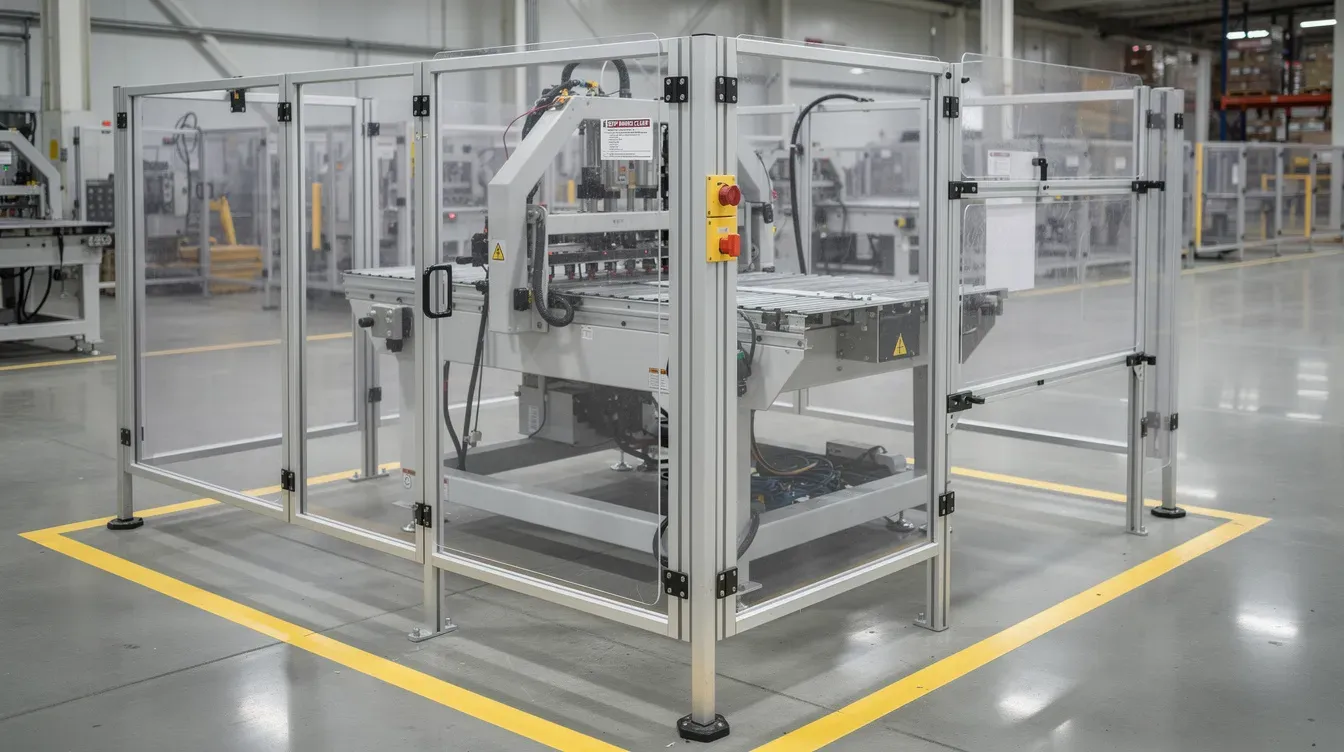
Safety and guarding
Polycarbonate is widely used for:
- Machine guards
- Viewing windows
- Safety shields
- Protective covers
- Transparent barrier panels
Where transparency is not needed, PVC, HDPE, or other sheet products may be used for guards, splash shields, and protective enclosures. These applications benefit from impact resistance, chemical resistance, and easy fabrication.
Structural framing and supports
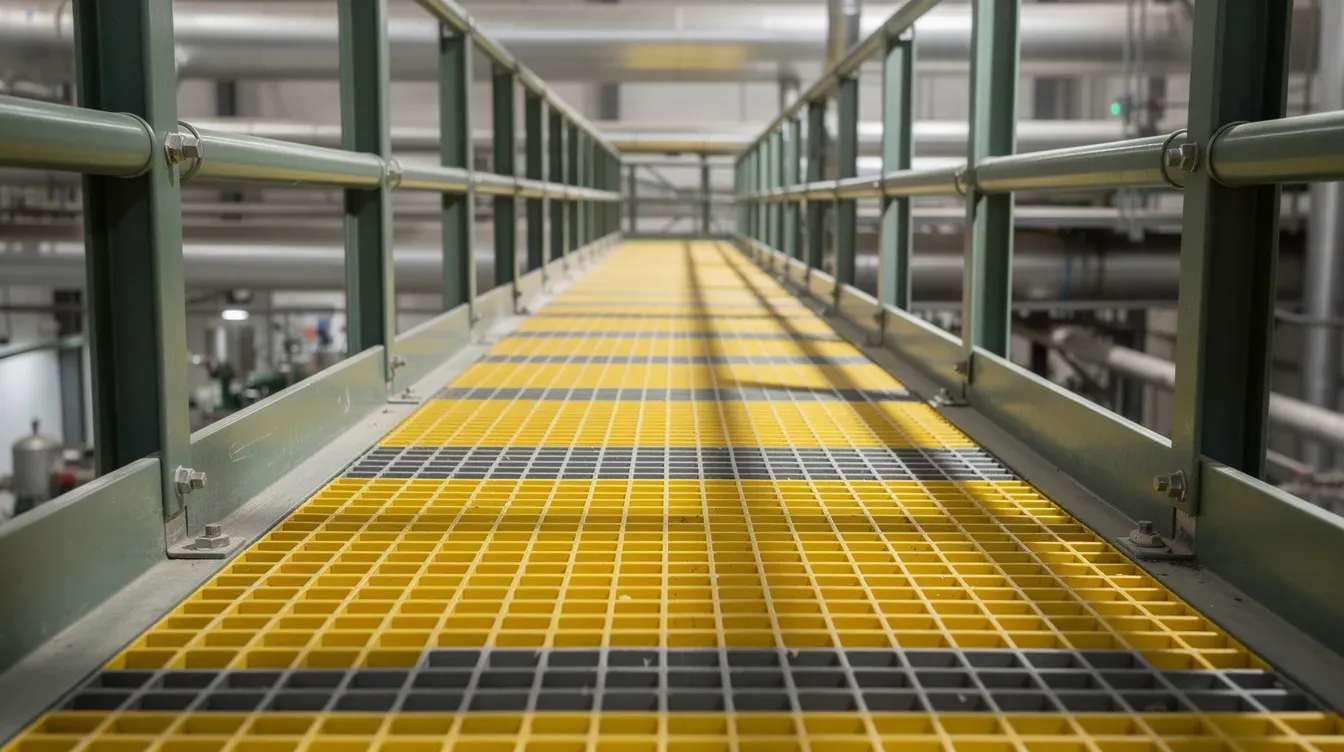
Structural plastics and composites can replace metal in corrosive or wet areas. Common examples include:
- FRP beams and channels
- Fiberglass grating
- Plastic platforms
- Equipment risers
- Brackets
- Outdoor supports
- Pump house components
Fiberglass is commonly used in the construction industry, and FRP is used in the construction and automotive industries. FRP materials are resistant to chemicals, corrosion, and UV radiation. Fiberglass is resistant to chemicals, corrosion, and uv radiation, making it especially useful in outdoor and industrial environments.
Fluid handling and chemical service
Polypropylene, PVC, HDPE, and FRP composites are often used for:
- Tanks
- Liners
- Duct components
- Manifolds
- Scrubbers
- Pipe supports
- Chemical containment parts
The best choice depends on the chemical, temperature, pressure, and service life required. FRP can be engineered with different resin systems, while solid plastics such as polypropylene and PVC are often chosen for simpler fabricated parts.
Custom machined components
Machine shops regularly use acetal, nylon, UHMW, HDPE, and other engineering plastics for:
- Bushings
- Gears
- Spacers
- Wear pads
- Fixtures
- Rollers
- Isolators
- Tooling plates
- Replacement parts
These materials work well when parts need to be lightweight, non-corrosive, low-friction, or electrically insulating. They also help manufacturers produce custom solutions without waiting for castings, forgings, or complex metal fabrication.
Industrial Plastics vs. Composite Material Systems
Solid engineering plastics and composite material systems are related, but they are not the same.
A stand-alone engineering plastic, such as acetal rod or UHMW sheet, is typically a uniform material throughout the part. It is easy to machine and useful for precision components, wear parts, spacers, bearings, fixtures, and small structural elements.
A composite material system uses a combination of materials to improve performance. Fiber-reinforced plastic, or FRP, combines a plastic matrix with glass or carbon fibers for higher stiffness and strength. The reinforcing fiber carries much of the load, while the resin matrix holds the structure together and protects the fibers.
This creates important differences.
| Choose solid engineering plastic stock when... | Choose FRP or composites when... |
|---|---|
| You need machined details or tight tolerances | You need higher stiffness over longer spans |
| The part is a bushing, spacer, gear, or guide | The part is grating, a platform, a beam, or a panel |
| You want more uniform properties in all directions | You can design around fiber direction |
| The part is small or medium in size | The structure covers a larger space |
| Fast machining is the main step | Structural performance is the main goal |
Fiberglass grating, structural FRP beams, and sandwich panels can outperform solid plastics in long-span structures, corrosive walkways, and architectural panels. On the other hand, acetal rod or nylon sheet may be the better choice for precise machined parts inside a piece of equipment.
There is no single best answer. The right choice depends on load, environment, deflection limits, temperature, chemicals, fabrication process, and budget. Ready Plastics supplies machinable performance plastics for fabricators and can help customers compare plastic and composite solutions when the application is not obvious.
Partnering with Ready Plastics for Structural Applications
Ready Plastics is built for fast, reliable sourcing of industrial and structural plastics. Fabricators, machine shops, and manufacturers often need to quote quickly, confirm availability, and get material delivered on time. Ready Plastics makes that process easier.
Our value comes from a simple operating model:
- Real-time inventory
Check availability before you quote or commit to a job. - Transparent pricing
See clear pricing so your team can estimate cost, protect margin, and save money. - Rapid fulfillment
Get material moving quickly for prototypes, production runs, repair jobs, and maintenance shutdowns. - Order portal access
Use your account to view order details, status updates, tracking, and documentation in one place. - End-to-end tracking
Know where your products are from purchase to delivery. - Documentation with every shipment
Every order includes a Certificate of Conformance and full documentation to support quality, traceability, and compliance.
Ready Plastics helps manufacturers hit tight timelines when downtime is expensive and material delays create problems on the shop floor. Whether you need sheet for guards, rod for bushings, tube for spacers, or stocked plastic for in-house fabrication, our services are designed to support real production work.
You can learn more about our sourcing model on the Ready Plastics About Us page.
If your staff needs help narrowing down a material, our team can provide practical support based on the application, environment, and design requirements. The goal is not just to store inventory. The goal is to help customers get the right material, in the right size, at the right time.
Browse available materials, request a quote for your structural plastics project, or contact Ready Plastics today for material selection support.
Upcoming Events & Learning Resources
This section keeps customers informed about upcoming events and educational content related to industrial and structural plastics.
As of June 5, 2026, there are currently no upcoming events scheduled. Please check back for updates on future webinars, training sessions, and events covering structural plastics, composite material selection, fabrication tips, and industrial applications.
Ready Plastics may also provide learning resources such as:
- Application guides for structural plastics
- Material comparison charts
- Case studies showing plastics replacing traditional materials
- Fabrication tips for sheet, rod, and tube
- Selection support for FRP, UHMW, HDPE, polycarbonate, acetal, nylon, PVC, and other products
If you want to be notified about future resources or events, contact the Ready Plastics team. We can help you learn which material is the best choice for your application and support your next order from quote to delivery.
Tough, lightweight, and moisture-resistant polymer widely used for outdoor lumber, tanks, and structural panels.
Ultra-high molecular weight polyethylene offering unmatched wear resistance, low friction, and exceptional impact toughness.
Strong engineering plastic reinforced with glass fibers to dramatically increase stiffness, load capacity, and wear life.
Precision engineering thermoplastic with low moisture absorption, making it the choice for machined structural fixtures, gears, and rollers.
High strength-to-weight ratio plastics and composite systems.
Same-day shipping on in-stock sheet, rod, and tube shapes.
ISO 9001 and AS9100D compliant material sourcing.